Making chilli flakes in the dehydrator

With our frosty winter coming up, I'm not sure if my chilli plants will survive, and even if they do regrow in summer, I certainly won't be harvesting chillies over winter, so I decided to try to preserve some of the extra chillies that I have harvested this season.

chillis!
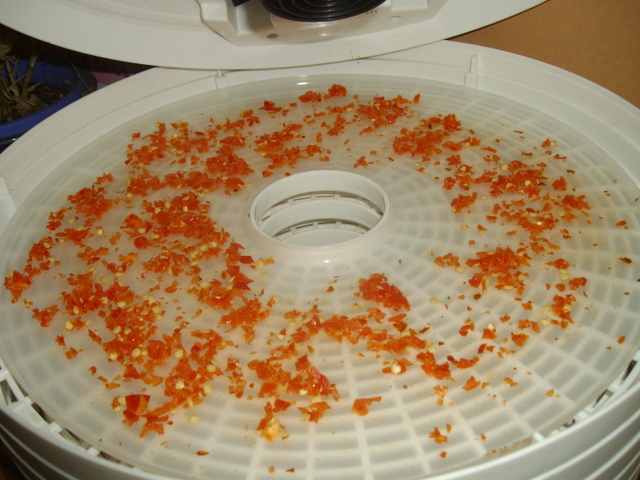
I used the solid tray in my dehydrator to dry chilli flakes.  I just put 4 chillies in the blender (tops cut off and chillis cut in half, for some reason I made the mistake of putting my head over the blender and inhaling deeply to see what it smelled like, woo wee, not a good idea unless you need to clear your nostrils!), and scraped the resulting chopped chillies onto the tray (this is a very exciting success for the blender as I hate chopping chillis, you can never quite wash the hotness off your hands and then you have to be very careful where you put your fingers!).  The flakes dried over a few days (with only a couple of hours of drier operation, my strategy is to run the drier when we're at home and leave the herbs/flakes etc in the drier for a few days to air dry naturally).  I will keep making more as the chillies ripen and we will have chilli to use over winter.

More about drying herbs in the dehydrator here.

the flakes in the dehydrator
chilli flakes in the jar
Have you tried making chilli flakes?  What do you make in your dehydrator?

Comments

  1. Looks great! I've recently obtained good seed and decided to grow numerous chillis after winter so that I can make my own powder and flakes too. Your post is timely and helpful, cheers!

    ReplyDelete
  2. Neat idea. I wouldn't have thought of this.

    I've still got a bag of chillis in my freezer from the one and only plant I grew 5 years ago. They still work great in recipes. (I don't use them that often as I don't have the best spice tolerance.)

    ReplyDelete
  3. Great tip! I had always wondered how to do this. I have just been buying mine. Now I can use the ones from my garden! Yea!

    ReplyDelete
  4. thanks for the comments, hope it works, I should have said that if you don't have a dehydrator, you could just try chopping the chillies and spreading them on a tray to dry, even put them in the oven after baking something else (with oven turned off).

    ReplyDelete
  5. ahhh, now I know what to do with those chillies, thanks

    ReplyDelete

Post a Comment

Thanks, I appreciate all your comments, suggestions and questions, but I don't always get time to reply right away. If you need me to reply personally to a question, please leave your email address in the comment or in your profile, or email me directly on eight.acres.liz at gmail.com

Popular posts from this blog

Cooking and eating beans

When I was growing up, my family never ate many dried beans, they just weren't something that was used much in NZ cuisine.  If I did eat beans, it was always from a can (and most likely baked beans).  And until recently I was still using beans from a can, but it can be difficult to get organic beans, and to find cans not lined with BPA.  Then I had an opportunity to buy some organic dry goods in bulk, so I bought 5kg of kidney beans, 5kg of adzuki beans and 5kg of chickpea (garbanzo beans).  I know, that is a lot of beans.  And then I didn't really know what to do with them!  Not just what dishes to put them in, but how to prepare them, I just didn't know what method to use. So I decided it was time to learn how to use all these beans that I bought, here's what I found out. I started with an excellent ebook called The Everything Beans Book , from Katie at Kitchen Stewardship, which has lots of bean recipes, but more importantly, an explanation of h...

Guest post: Is there a place for power tools in the garden?

One of my regular readers and commenters offered to write a guest post about a horticulture course, its quite a funny read, with some serious insights into our technology obsession.  If you'd like to submit a guest post, email me at eight.acres.liz {at} gmail.com.  While I am always happy to share links back to your blog or website, this contributor preferred to remain anonymous.  I hope you enjoy their story.... -**-  -**-  -**-  -**-  -**-  -**-  -**-  -**-  -**-  -**-  -**-  -**-  -**-  -**- Just a few days ago our daily horticulture classes were interrupted by an invitation to review some new gardening gadgets. The idea was to open half a dozen of electric hand trimmers , test them and fill in some review about their goods and bads. As nothing is more dear to a student – even a “hort “ one - to escape routine and mess around till lunchtime, we opened the boxes and got down to business. What did we...

Making tallow soap

Sign up for my weekly email updates here , you will find out more about soap and our farmlife, straight to your inbox, never miss a post!  New soap website and shop opening soon.... For some reason I've always thought that making soap seemed too hard.  For a start the number of ingredients required was confusing and all the safety warnings about using the alkali put me off.  The worst part for me was that most of the ingredients had to be purchased, and some even imported (palm oil and coconut oil), which never seemed very self-sufficient.  I can definitely see the benefits of using homemade soap instead of mass produced soap (that often contains synthetic fragrance, colour, preservatives, and has had the glycerine removed), but it seemed to me that if I was going to buy all the ingredients I may as well just buy the soap and save myself all the hassle.  For the past several years I have bought homemade soap from various market stalls and websites, and that...