
Thanks everyone for the comments on my first post about tanning our first two steer hides. I was asked a few questions and I've done some more research since then, so I thought it was time for an update.
---------------------------------------------------------------------------------------------------------
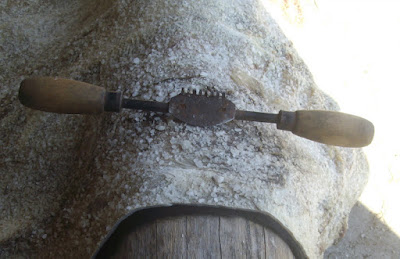
I was asked to provide a photo of the fleshing tool, so here's the one we got with the kit. My husband made I similar tool from metal, so we'd have one each. If you're not a metal-worker, then you can probably use any blunt tool (or bit of metal) that's large enough to grip each end.
-----------------------------------------------------------------------------------------------------------
Also, because I only described our process, I didn't go into detail about the other methods available for tanning hides. From my research (google and books I mentioned in the last post), the following methods are possible:

---------------------------------------------------------------------------------------------------------
I was asked to provide a photo of the fleshing tool, so here's the one we got with the kit. My husband made I similar tool from metal, so we'd have one each. If you're not a metal-worker, then you can probably use any blunt tool (or bit of metal) that's large enough to grip each end.

-----------------------------------------------------------------------------------------------------------
Also, because I only described our process, I didn't go into detail about the other methods available for tanning hides. From my research (google and books I mentioned in the last post), the following methods are possible:
- chrome tanning (the method we used)
- "brain tanning" - using either the brain or other oily mixture to coat the hide
- tanning using tannin from the bark of certain trees (would love to know which Aussie trees to use, Oak seems to be a common one for the US)
- smoking the hide (apparently this doesn't keep as long and can go quite stiff)
- someone told me to use baking soda, but I couldn't find out anything else about that method
Any of these would be more self-sufficient options, but as we had no idea what we were doing when we started this, we decided to try to keep things simple by buying a kit. Also, we've been able to re-use the tanning solution twice now, so it doesn't seem worth trying another method while we still have viable tanning solution.
-----------------------------------------------------------------------------------------------------------
As the solution that we bought didn't have any instructions or an ingredients list (dodgy right?) we assumed the worst possible ingredients. As sulphuric acid, chromium sulphate and alum are commonly used for chrome tanning solutions, we assumed that the solution contained these chemicals. I looked up the Material Safety Data Sheets (google again) for each chemical to double-check the safety precautions. Alum is harmless, but chromium sulphate is both toxic by ingestion, and an irritant by inhalation and skin contact. Sulphuric acid in sufficient concentration can cause burns. The appropriate personal protective equipment for this process (especially when working with the undiluted solution) is therefore gloves, goggles, splash-proof apron and a well-ventilated area. Once the solution is diluted it is safer, but still be cautious about splashing it on your skin or near your eyes.
Another important point is never add water to acid, always add acid to water. This is because the solution heats up as it mixes and if you are adding acid to plenty of water you'll hardly notice, but if its water to a small amount of acid, you will know about it, the heat could be sufficient to cause the liquid to boil, which is even more dangerous! To be safe, we put the water in the wheelie bin first and added the tanning solution to that.
Some of the other methods listed above would be safer in terms of human health and environment (still don't know how to dispose of the chrome tanning solution, part of the reason we keep it in the wheelie bin!).
------------------------------------------------------------------------------------------------------------
Rinsing the hide after tanning was done by hanging the hide over a gate and hosing it with the pressure cleaner (not sure what these are called in other countries, so included an example photo below).
--------------------------------------------------------------------------------------------------------
I'm happy to answer any further questions, and I'd love to hear from anyone else who has tried this. Please leave a comment below.
Wouldn't the aborigines (sp?) in the region know which trees could be used for tannin bark? I hope to have a little farm in the next few years and i'll be raising sheep and goats so i've studied tanning but haven't gotten a chance to do it yet. I'll probably go with the brain tanning choice, since the brains are readily available for each hide.
ReplyDelete--Allen
you use wattle bark for tanning - heaps of info out there!
ReplyDelete